
Call us: (+91) 9945003820
Hologram Stickers vs Standard Labels: What’s the Difference?
Have you ever held a genuine product next to a counterfeit one? You’ll be surprised at the astonishing level of similarity that exists between the two. Such counterfeits are designed to look as close to the original as possible. That is a problem for companies all over India who wish to keep their proprietary products safe from fakes.
That is also the reason why, today, many companies are reconsidering how they label, seal, and protect their products. It’s no longer a case of hologram stickers versus regular labels; it’s a matter of trust and brand reputation in a market ripe with imitations.
At Colorflex, we work with such businesses to help them make a crucial choice: how can they best protect their products? Let’s break it down.
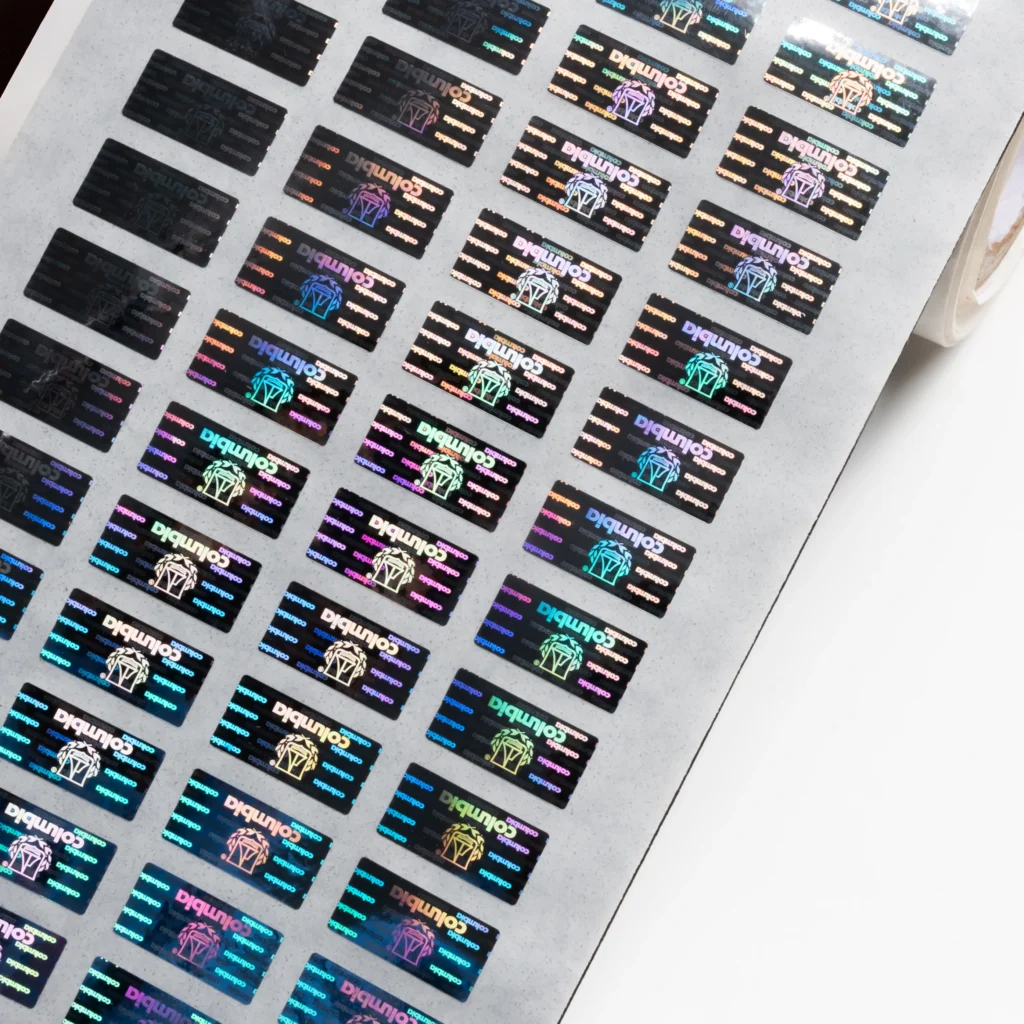
Comparing Hologram Sticker vs Standard Label
1. Security and Anti-Counterfeiting
Standard labels are printed using conventional processes – easy to design, but just as easy to replicate. A counterfeiter with access to a decent printer can copy a standard label within days. Hologram stickers, in contrast, rely on multilayered optical technologies that are nearly impossible to counterfeit.
As a security hologram sticker manufacturer, we imprint each and every hologram with our special visual effects—3D depth, color shifting elements, or micro lettering – that you can only recreate with specialized equipment.
This is also why our security hologram stickers have established themselves as the standard choice for the pharmaceutical industry as well as high-quality fashion brands.
2. Customization and Branding
This is the area where custom hologram stickers really shine. In addition to adding security features, these stickers also allows a company to:
– Implant its own branding (logos, company initials, etc.).
– Place serial numbers, or specific date codes.
– Add barcode, or QR code which links to a relevant URL.
– Include a tamper evidence component, such as void if broken or opening indications, which makes the sticker an active part of the packaging.
A regular sticker can carry some kind of brand-name, logo or inscription, but can’t even get close to the multidimensional branding signature.
3. Application Versatility
For basic labels, the scope of application is generally flat and simple packaging. Hologram label printing can provide more flexibility – carton printing, sticker printing, certificate sticker printing, ID card printing and printing on documents needing authentication, etc.
Hologram stickers for certificates are commonly utilized by academic institutes and government organizations to stop the reproduction of certificates and official documents, where it is impossible to be addressed by ordinary stickers.
4. Cost vs Long-Term Value
Yes, standard labels are a cheaper choice initially, but when counterfeiting costs you in terms of revenue and lost customer trust, those initial savings quickly vanish.
Working with an experienced hologram sticker supplier can be less costly in the long run because you protect yourself and ensure customer satisfaction and minimize returns.
5. Durability
Most hologram sticker options are manufactured using weather-resistant, security-grade tamper proof and tamper-evident material, which makes it extremely difficult to remove without leaving visible evidence and prohibit their use for labeling. This security feature usually is not available with standard label options.
Conclusion: Which One Should You Choose?
If your concern is purely informational (price, components, instructions), then a simple label suffices. However, if your concern is for brand, authenticity, or protecting your valuable documents such as certificates, you’re going to need the higher security provided by our hologram stickers.
Colorflex has spent years perfecting hologram label printing for businesses that refuse to compromise on security. Learn more about what custom hologram stickers can do for your business.
Curious which option suits your business? Let’s talk—your brand’s authenticity is worth protecting.